Großer, prunkvoller Raum mit Thron, Kerzenleuchter und Deckenmalerei
© Staatliche Kunstsammlungen Dresden, Foto: Frank Grätz

The State Apartments of August the Strong at Residenzschloss Dresden

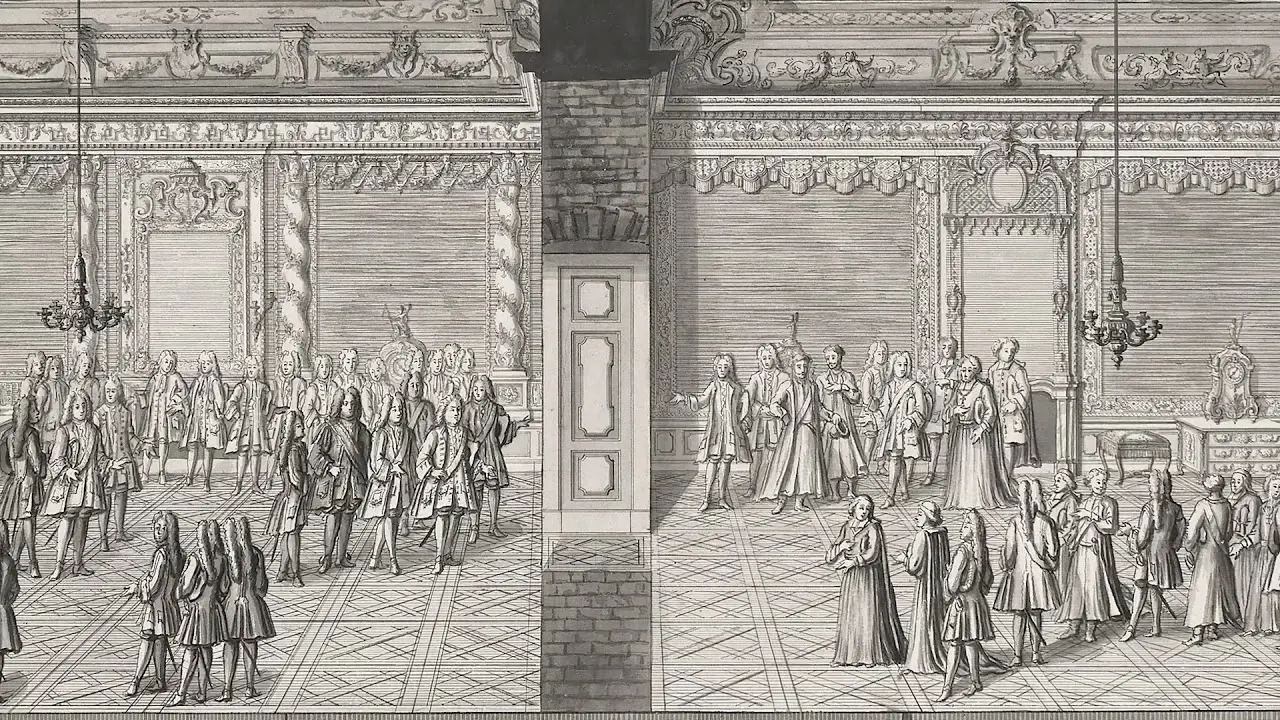
The celebrations surrounding the marriage of Electoral Prince Friedrich August II to Maria Josepha, daughter of the Austrian Em­peror, in Dresden in September 1719 occasioned the construction of the royal State Apartments. The opening of the faithfully reconstructed State Apartments 300 years after their original creation marks the glorious climax of 33 years of reconstruction work on Dresden’s former electoral and royal palace, the Residenzschloss.

  • Opening Hours daily 10—17, Tuesday closed Christmas Eve, 24/12/2025 10—14 Christmas Day, 25/12/2025 10—17 Boxing Day, 26/12/2025 10—17 New Year's Eve, 31/12/2025 10—16 New Year, 01/01/2026 12—17
    05/01/2026 — 30/01/2026  closed

    Please be aware that the Paraderäume will be closed from 05.01.—30.01.2026. 

  • Admission Fees normal 16 €, reduced 12 €, under 17 free, Groups (10 persons and more) 14,50 €
Book online

[Translate to English:] Film

Privacy notice

When you play our YouTube or Vimeo videos, information about your use of YouTube or Vimeo is transmitted to the US operator and may be stored. In addition, external media such as videos or fonts are loaded and stored in your browser.

Die Eröffnung der Königlichen Paraderäume und des Porzellankabinetts im Residenzschloss Dresden

Paradeappartements

The luxurious suite of rooms in­cluded a banqueting hall, two antechambers, the Audience Cham­ber with the throne, and the State Bedroom containing the mag­nificent imperial bed. Thanks to a great deal of hard work, expense and professional expertise, as well as supreme craftsmanship, it has been possible to recreate a structural work of art that provides an authentic experience of the palace’s magnificent 18th-century interior.

Großer, reich verzierter Raum mit Kronleuchtern, Deckenmalerei und Goldelementen
© Kunstgewerbemuseum, SKD, Foto: Frank Grätz
Paradeschlafzimmer der Paraderäume

[Translate to English:] Paradeappartments

The preserved originals from the Kunstgewerbemuseum (Museum of Decorative Arts), such as the gilt silver furnishings from Augsburg, numerous paintings from the Gemäldegalerie Alte Meister (Old Masters Picture Gallery), valuable mirror frames and the gold pilasters from the Audience Chamber, which were already exceptionally precious at the time of their creation, testify to the original appearance of the rooms and still today cannot fail to impress.

Privacy notice

When you play our YouTube or Vimeo videos, information about your use of YouTube or Vimeo is transmitted to the US operator and may be stored. In addition, external media such as videos or fonts are loaded and stored in your browser.

Die Paraderäume im Residenzschloss Dresden und ihre Geschichte

The Rooms

Magnificent costumes

The collection of royal costumes from the Wardrobe of August the Strong (1670-1733), part of the Dresden Rüstkammer, marks the culmination of the Baroque style in royal garments, of which King Louis XIV of France was the epitome. Nowhere has such a complete collection of costumes from this era been preserved in such outstanding quality as in Dresden.

Ausstellungsraum mit Vitrinen und Besuchern
© Staatliche Kunstsammlungen Dresden, Foto: Oliver Killig

Precious furnishings

This ensemble consisting of a pendu­lum clock and high pedestal was made by the eminent Parisian cabinetmaker Jean-Pierre Latz (1691-1754). These items are masterpieces of Parisian ornamental carpentry from the period around 1740. Objects of this kind are regarded as some of the most prestigious furnishings of the first half of the 18th century.

Kommode, Bänke, Standuhr und reich verzierter Stehtisch
© Staatliche Kunstsammlungen Dresden, Foto: Frank Grätz

Works of the goldsmith’s art

The Dresden fireplace screen, a work of supreme craftsmanship made of embossed silver plate, was made by the famous Augsburg goldsmiths Albrecht and Lorenz II Biller and is one of the most outstand­ing objects in the State Apartments. Only a few silver fireplace screens from this period have survived.

Großer, prunkvoller Raum mit Thron, Kerzenleuchter und Deckenmalerei
© Staatliche Kunstsammlungen Dresden, Foto: Frank Grätz
Audienzgemach der Paraderäume
A kingdom by the grace of France – Napoleon in Dresden (1806–1813)

Small Picture Gallery

In July 1807, the Dresden Palace experienced a special moment in its history: French Emperor Napoleon Bonaparte I stayed overnight as a guest of honour in the otherwise uninhabited State Apartments. The previous year, Napoleon had elevated the Elector of Saxony, Friedrich August III, to the rank of King and thus secured himself a loyal ally. Magnificent creations of the imperial French manufactory for tapestry and porcelain arrived as presents for the first King of Saxony, Friedrich August I, known as “the Just”, in Dresden.

Raum mit großem Wandteppich und Kronleuchter
© Staatliche Kunstsammlungen Dresden, Foto: Jürgen Lösel
Small Picture Gallery
Princesses and princes, dogs and horses – Children and animals at the Dresden court

Grand Picture Gallery

The education of the ruling family’s children was of central political importance, as it ensured governmental stability and the future of the country. Between the ages of two and five their education began including lessons in reading, writing, arithmetic, foreign languages, court etiquette, and the teaching of skills for future social and political responsibility. The princes practised horsemanship, fencing, and military tactics. They also learned how to handle dogs and horses from an early age. Carefully selected dogs served as playmates, loyal companions, guard dogs, and indispensable hunting partners.

festlicher Saal mit Vitrinen und Gemälde an der Wand
© Staatliche Kunstsammlungen Dresden, Foto: Jürgen Lösel
Grand Picture Gallery

Neben Porträts

In addition to portraits, small-scale edged weapons and firearms, suits of armour, and children’s saddles bear witness to the practical activities of the princesses and princes. One highlight is a carved dog modeled on the mighty guard dogs of Johann Georg I. It wears a replica of a dog collar from the extensive collection in the armory, part of which is also on display here.

festlicher Saal mit Vitrinen und einem Hund in der Mitte
© Staatliche Kunstsammlungen Dresden, Foto: Jürgen Lösel

[Translate to English:] KGM

Multimedia Guide

[Translate to English:] Ausstellungen

Further Exhibitions

Historisches Grünes Gewölbe

in Residenzschloss

Blick in einen prunkvollen Raum mit Spiegeln und Ausstellungsstücken

Kupferstich-Kabinett

in Residenzschloss

Portrait eines Mannes mit Hut und Vollbart

Small Ballroom

in Residenzschloss

Ansicht eines Saales mit Kronleuchtern

Kunstgewerbemuseum

in Schloss Pillnitz

gelber Kasten mit vier Füßen

We are using cookies!

You can revoke your consent at any time.

The Staatliche Kunstsammlungen Dresden uses cookies to provide you with an optimal website experience. These primarily include cookies that are necessary for the operation of the website.

Click on "Accept all" to accept all cookies. You can change and revoke your consent at any time. For this purpose, the "Change cookie settings" button is available at the bottom of the page. Functional cookies will continue to be executed even without your consent.

If you would like to adjust the cookies used, you can reach the settings via the "Select" button.

You can find more information under Privacy or Imprint.

To top